Harmonizing the gospels (especially Holy Week)
The Good Novel

The Good Novel is a harmonization and novelization of the gospels, leading to the difficulty of reconciling differences and sometimes contradictions between the four accounts.
The first difficulty is reconciling the infant gospels included in Matthew and Luke which have little to do with each other. In Matthew wise men come to visit, and a jealous Herod attempts to kill Jesus by slaughtering all Bethlehem children about the right age. Forewarned, the holy family flee to Egypt and return only after he dies. In Luke choirs of angels appear, and prophecies abound. It is mostly possible to lump it all together and say it all happened, except for the flight to Egypt which contradicts Luke’s account of them returning to Nazareth after the census. If both happened, it’s unclear why the respective authors were unaware of, or declined to tell the whole story.
I’m inclined to credit Luke, and discount Matthew’s infant gospels because it appears Luke’s sources was one of the women of Jesus’ family (if not Mary herself), most of what Luke recounts would have been fairly private miracles, and everything he says feels more true to (in my experience) how the spirit operates. However, the Book of Mormon talks about signs and wonders accompanying his birth that are similar to Matthews and bears testimony of the same. Perhaps there is some reason Luke does not mention them, after all the point of signs and wonders is to get people’s attention.
For the Good Novel, I’ve chosen to omit the Egypt exodus, and also the slaughter of the innocents. As I’ve said, I find Lukes's account of Symeon and Annas’ testimony more stirring and the whole thing more human. I’ve no further proof nor strong arguments either way.
The next tricky harmony situation is the forty days following his baptism. In John, he picks up followers and starts teaching them. In the Synoptics, he is in the wilderness. I have the followers finding him after his fast in the wilderness. That is why Andrew and Phillip ask him where he is staying - they don’t want to lose track of him again, as had happened after his Baptism and the baptizer’s witness of him.
Holy Week
The timeline of Holy Week differs and appears contradictory in the gospels. We have Mary anointing him with oil for his baptism either the night before Palm Sunday or Tuesday Night. We have Jesus either celebrating Passover with his disciples (The Last Supper) or on the “day of preparation”. It’s difficult to reconcile how long he was dead. Details about the fig tree that he cursed are different.
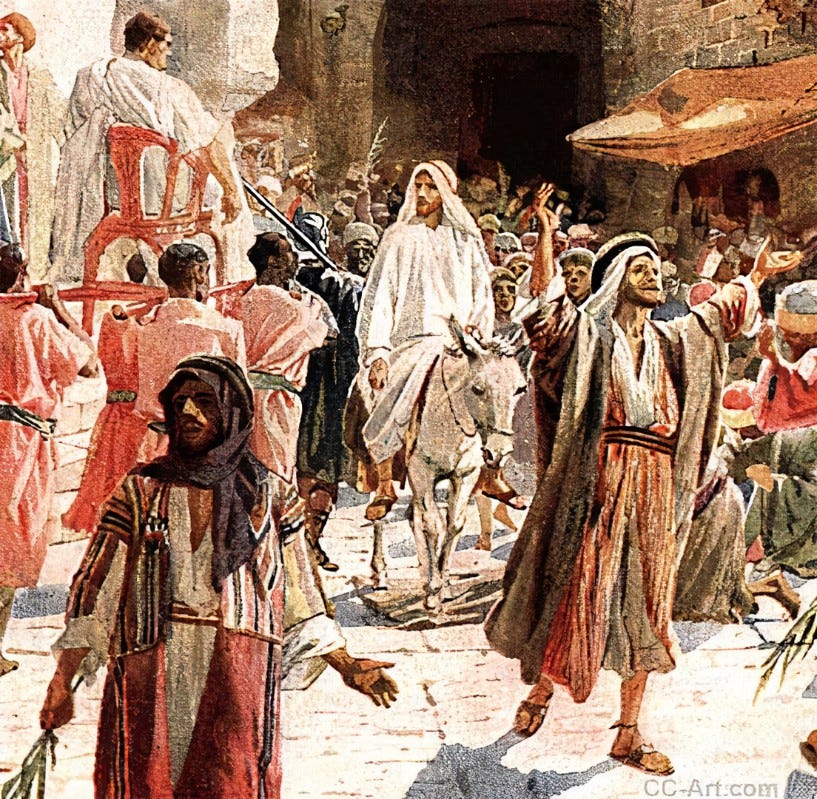
Psalm Sunday
Matthew (21) Riding a Donkey, very great multitude spread garments and fronds. Cleansing of the temple.
Mark 11. Riding a Donkey, many spread garments and fronds. Just looks around the temple.
Luke 19. Riding a Donkey, many spread garments and fronds and call him King. Pharisees tell him to correct that, and he tells them if he did the stones would cry out. Wept over Jerusalem, and cleanses the temple.
John 12. Mary annoints Jesus the night before (same day in Jewish reckoning where the new day starts at sunset). Riding donkey, crowd calls him King and spreads garments and fronds. Has a theological discussion with Greeks about light, and what he was going to do.
There is no direct contradiction here. I just add things the different accounts mention together into a much fuller timeline.
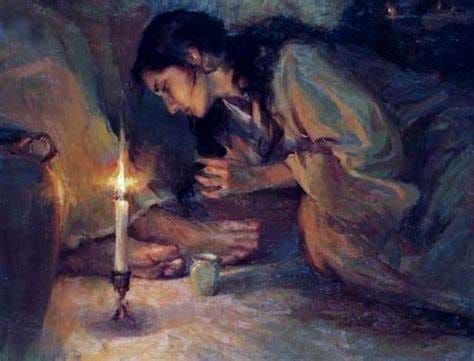
Mary Anoints Jesus for Burial
Mary anoints Jesus with spikenard in preparation for the burial. This would be either before his entry to Jerusalem on Palm Sunday, or at the end of his Ministry. In the first case, I would assume this was related to a ceremony where he was anointed King as he accepted the crowd’s acclamation in this case, where he had refused it in prior occurrences. The gospels themselves just say it was in preparation for his burial.
Mary Anoints Jesus: At the end of his ministry leads to awkwardness with the Wednesday night is the last night timeline. What did he do between it and the last supper? Moving his crucifixion to the Passover doesn’t resolve this.
The Passover Lamb
If Jesus is symbolically the Passover Lamb (or vice versa really) we would expect holy week to mirror the Passover lamb. In the law of Moses the Passover lamb is to be flawless without spot. The lamb is to be taken into the peoples houses (I’m imagining a Mediterranean style house and the lamb is in the courtyards and porches.) The purpose of this is for any hidden or subtle flaws that were not detected in teh first examination to be revealed.
We would expect Jesus to have a four day period to show his perfection in the house. Jesus finishes his ministry in the three days as he said to the Pharisees trying to scare him off, “Go and tell that fox (Herod): Today, you see me cast out devils and heal the sick. Tomorrow and the third day I’ll finish my work here. Then, well, Jerusalem is the place the prophets go to die.” Those days are Monday, Tuesday, and Wednesday. He was in the temple healed the sick, casting out devils, being examined and cross examined, and teaching. He is under the spotlight for flaws in his Fathers house.
The fourth day then would be Thursday. On this day he is taken to the The Chief priests house, and put on trial. They can’t convict him of anything despite calling up anyone willing to accuse him because their witnesses don’t agree. When he agrees with them he is the Son of God, they decide to put him to death for Blasphemey. They take him to the Governors mansion. He examines him privately in his house and has him scourged (enhanced interrogation) in his courtyard. The governor then pronounces that he finds no fault with this man. This is the fourth day of the lamb being in the house and being closely examined for faults. The Roman Govenor being involved shows he is the Passover lamb for the whole world, and not just for his chosen people.
The Last Supper
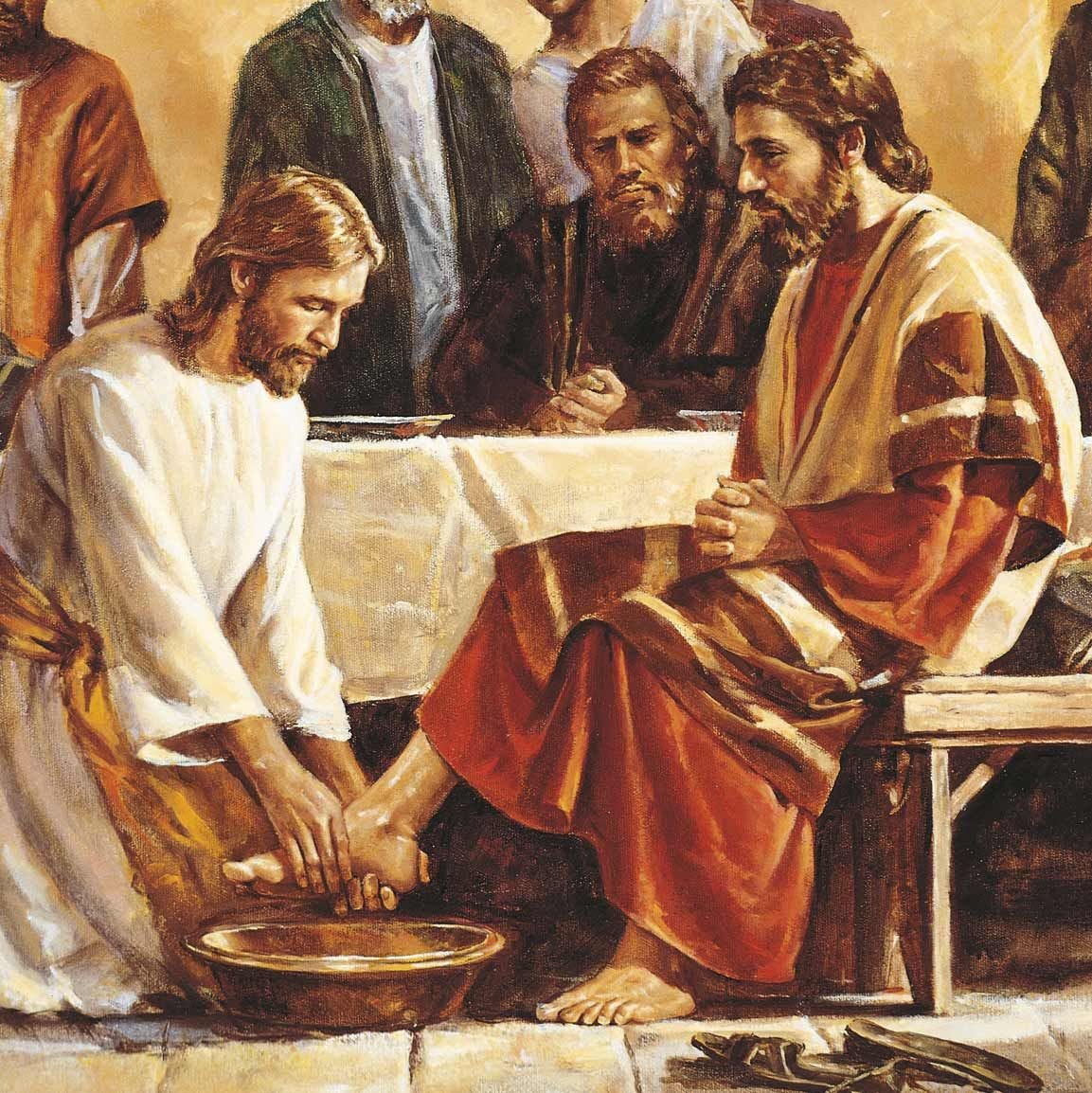
John 13. Places it as "before the feast of the Passover”. Jesus washes feet. Gives command to love one another and lots of other teachings.
Luke 22. Instructs the disciples to prepare a place for the Passover. Preparation consists of getting rid of leavened bread, gathering the correct meal, and travel clothes. Jesus says he desires to eat this Passover with them. Much less teaching than in John. 23:54 describes his burial as happening on “preparation day” which would have been on the same day by Jewish reckoning as the last supper.
Mark 14. Jesus says he will eat the Passover with his disciples and the room is already prepared. 15:42 also refers to it being preparation day, the day before the Sabbath in connection with the burial. The point is they can’t do work such as preparing a body and burying it on a Sabbath (holy day). Both the Passover and Saturday are Sabbath days.
Matthew 26. 1st day of unleavened bread - where shall we prepare the passover. Disciples make ready the passover. 27:62 also refers to the day that Jesus died and is to be buried as “preparation day”.
How to reconcile the differences? John places the Last Supper on the day before the Passover, and the other three say it is on the Passover or strongly imply it, but then say the death and burial happen on preparation day which is the same day as the last supper by Jewish reckoning. The answer for the traditional timeline is that some of the gospel writers were using the Jewish start of the day at sunset and others were using a Greek start at sunrise. That could explain John saying the Last Supper was the day before Passover, but it doesn’t explain why the synoptics say that Jesus was buried on preparation day. What is meant by preparation day (literally ‘the preparation’). Some research is needed.
I found a website called Jews4christians IIRC*, which said that on the day before Passover (Seder) observant Jews often will have a meal of leavened bread along with thoroughly cleaning their house on the day, even, for example, vacuuming under the couch, because there might be a crumb of leavened bread there, and so forth. This last meal of leavened bread is to use up the bread in the house so as to not waste it. It says that the leavened bread had come to represent sin in the Judiac tradition. Passover is a 7 day long holiday (8 if you count the day you prepare for it) and the first and seventh day are sabbaths (holy days, where men are to rest). Every Saturday is also a Sabbath. Some traditions have the 1st, 2nd, 6th, and 7th day of Passover as Sabbaths, hedging the law. Finally, the Passover is about not dying, and being freed from slavery, both of which are linked to sin.
*I looked for the website and found something similar. Maybe it is the same website but updated and polished from when I first saw it. Link.
My harmonization is based on the following assumptions - preparation day was linked to the sequence of all the Passover days and as such was called the first day of unleavened bread or the Passover, as it was a part of the whole.
This timeline fulfills the symbolism of Jesus as the Passover lamb for the world that the fourth gospel uses. Leaven had come to symbolically mean sin and death because bacteria (yeast) is a bacteria, which are agents of decay associated with death and corruption, so the symbolism of the Last Supper (if on preparation day eating leavened bread as part of getting ride of it) is Jesus eating all the death and sin. He cleanses the disciples the same way the house is cleaned on preparation day, taught them to love one another, and told them that though he was leaving them another comforter would come. Then having take upon himself all the sin of the world (corruption and death) symbolically he goes to the garden and literally takes it upon himself and atones for it.
This is different from the traditional harmonization which says John’s feast of the unleavened bread means the Passover meal and ignores his references to it being the day before passover, and the other gospels calling that day “the preparation” in connection with his burial. I’m assuming that first meal to eat all the leavened bread before it was burned got lumped into the holiday as part of the week of unleavened bread and that’s why they call it the feast of unleavened bread, the first day of unleavened, seeing no contradiction to it being the first official day of the Passover as preparing for the Passover meal (Seder) the day before was an integral part of the Passover.
Burial
Jesus is arrested after the last supper tried, both in the Chief Priests house and the governors mansion. He dies about the same time the paschal lambs would have been slaughtered. Some disciples hurry to get him buried before sunset which is the beginning of the Holy Day, the first day of Passover, which is a sabbath when no work can be done. An unburied corpse would be against the law of Moses, and a considerable dishonor. Joseph of Arimathea puts him in his nearby tomb - a very expensive construction. “He was assigned a grave with the wicked, and with the rich in his death.” The women gather spices for the burial, but don’t get it together before the sun sets and they have to rest.
Friday is the high holy day of Passover week, so his women followers can’t go to the Tomb to prepare his body properly and move it to his final resting place, because it is a day of rest. They were trying to get the necessary things together but didn’t make it before the sun set.
Saturday is the Sabbath so they still can’t go. Only on Sunday are they finally free to go.
On the first Passover the Israelites would have eaten their meal after the sun went down. Then word would have come - Pharoah is letting us go! We are free! Similarly in this case Jesus went to the underworld and proclaimed liberty to the dead captive there. The bonds of death were to broken, on conditions of repentance.
The next and final Post about The Good Novel: Resurrection and Glorification